7 Everyday Habits That Make Tennis Elbow Worse
Lateral epicondylitis affects the tendons that attach to the outside of your elbow. It is a tendon overload condition, meaning the tissue has been asked to handle more stress than it is currently capable of supporting. At Cedar Chiropractic & Physiotherapy in Burnaby, we often see how small, seemingly harmless daily habits quietly keep these tendons in a state of constant irritation.
The encouraging news is that tendons are remarkably adaptable. Once you identify the habits that are overworking the tissue, you can start a targeted recovery plan to rebuild its strength.
Get Help For Tennis Elbow Pain Now
1. Operating With A Long Lever
One of the most taxing habits for your elbow is lifting or carrying objects far away from your body. Biomechanically, the further an object is from your torso, the more weight it effectively “gains” due to leverage.
When you pick up a laptop, a heavy pot, or a grocery bag with a straight arm, the tendons at your outer elbow have to work ten times harder to keep your wrist from collapsing. This constant high-magnitude tension is a primary driver of tendon wear.
How to adjust
Shorten the lever. Whenever you lift or carry something, keep your elbow tucked closer to your ribs. By bringing the weight toward your center of gravity, you allow the larger muscles of the shoulder and upper back to share the load, instantly offloading the sensitive tissues at the elbow.
2. Maintaining Static “Wrist-Lock”
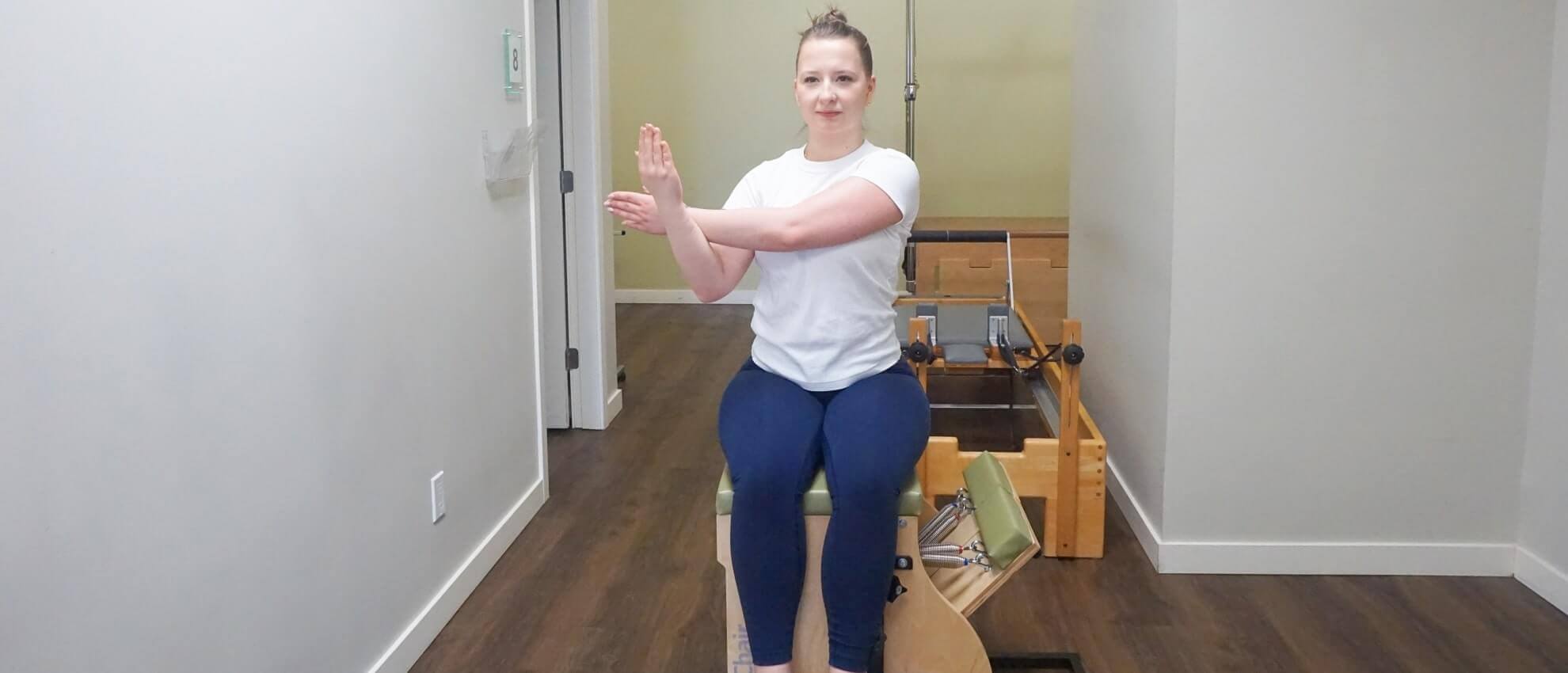
We often think of repetitive motion as the enemy, but static loading is just as damaging. This happens when you hold your wrist in a fixed, slightly extended position for a long duration—such as holding a phone, a tablet, or a heavy hair styling tool. In this locked position, your tendon is under constant tension, which can restrict local blood flow and prevent the tissue from clearing out inflammatory byproducts.
How to adjust: Avoid the “death lock”
If your task requires holding an object for more than a few minutes, consciously shift your wrist angle every 60 seconds. Small movements allow for vascular flushing, ensuring your tendon receives the oxygen and nutrients it needs to stay healthy during activity.
3. Navigating A Poor Desk Setup
For those working at a computer in Burnaby, the workstation is often the culprit. Typing with your wrists extended upward or resting your forearms on the hard edge of a desk creates constant, low-level strain. Over an eight-hour workday, that tension accumulates into significant irritation.
Common desk mistakes include
- Positioning your keyboard too high, forcing the wrists into a permanent bend
- Placing your mouse too far away, which requires your shoulder and elbow to reach
- Typing without any forearm support, leaving your tendons to hold the weight of your arms
A neutral wrist position, where your elbows are at roughly 90 degrees and your forearms are supported, can dramatically reduce daily tendon stress.
4. Excessive And Uninterrupted Mouse Use
Using a mouse requires subtle but continuous wrist extension to keep your fingers hovering over the buttons. This sustained activation is exhausting for your tendons. If you spend hours scrolling without breaks, your tendon never gets a chance to relax.
Strategies for relief
- Invest in an ergonomic or vertical mouse to change the angle of the wrist
- Switch your mouse hand periodically to share the load
- Take micro-breaks every 30 to 45 minutes to perform gentle wrist mobility drills
5. Ignoring The Early Warning Signs
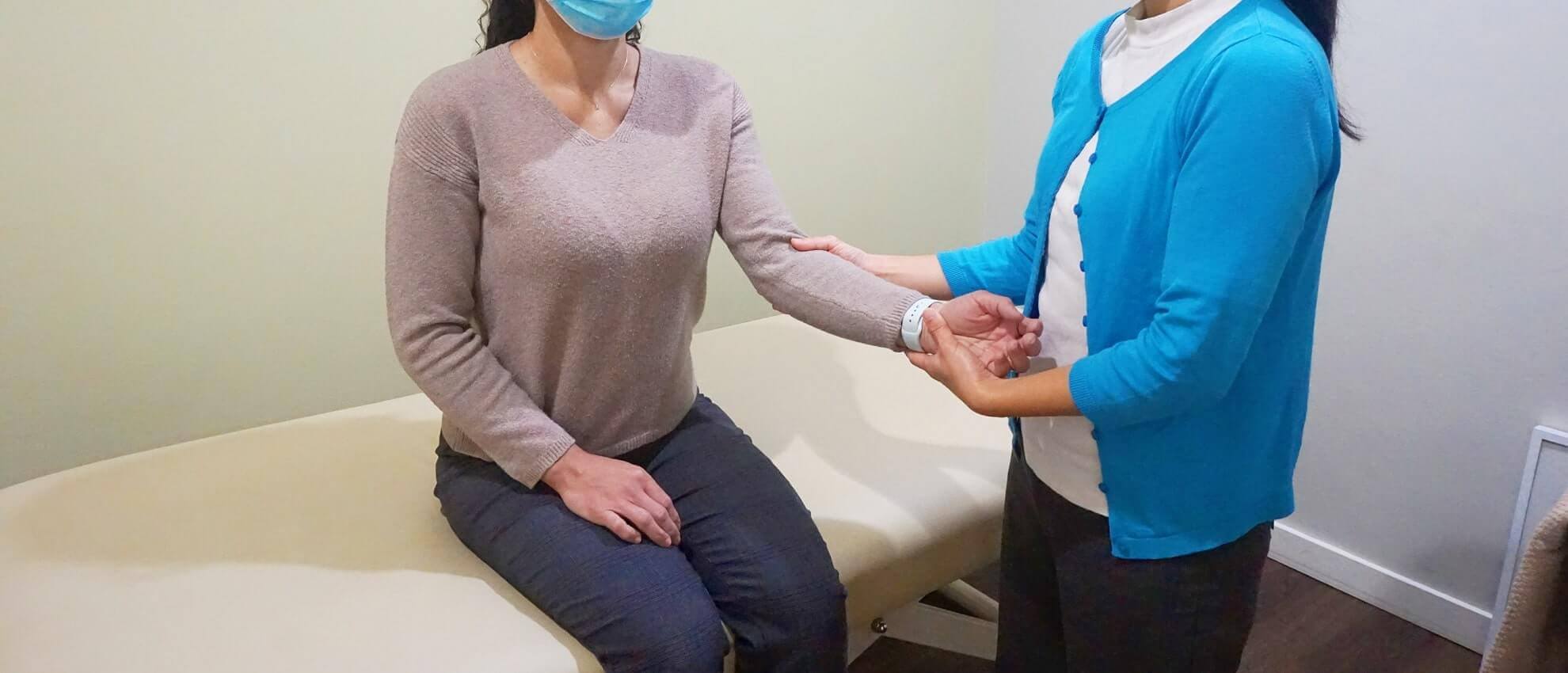
Tennis elbow rarely appears out of nowhere. It usually provides early feedback, such as mild stiffness in the morning, tenderness when you press on the outside of the bone, or a slight weakness when opening a jar. Many people try to push through these symptoms, but doing so often turns a minor irritation into a chronic condition that takes much longer to resolve.
Early intervention leads to much faster outcomes and prevents long-term changes to the tendon structure.
6. Stopping All Activity Completely
This habit is often the most surprising to patients. While it feels intuitive to stop moving when something hurts, complete rest for several weeks could actually weaken your tendon further. Tendons thrive on load; they need a certain amount of stress to stimulate repair and maintain their integrity.
At Cedar Chiropractic & Physiotherapy, we move away from total rest and toward controlled, structured strengthening. We use a concept called progressive loading to challenge your tendon safely, helping you become resilient enough to handle your daily activities again. Irritated does not mean the tissue is damaged beyond repair; it just means it is currently overwhelmed.
7. Performing Repetitive Exercises Incorrectly
Some people attempt to self-treat by doing high-repetition wrist curls they found online. However, without a proper loading strategy, doing too much too soon can actually worsen your pain. Effective treatment is about finding the right dose of exercise.
Successful rehabilitation typically involves
- Eccentric strengthening: Lengthening the muscle under tension to build tendon resilience
- Heavy slow resistance: Using heavier loads with very slow movements to stimulate tissue repair
- Scapular stabilization: Strengthening your shoulder so your elbow does not have to work as hard
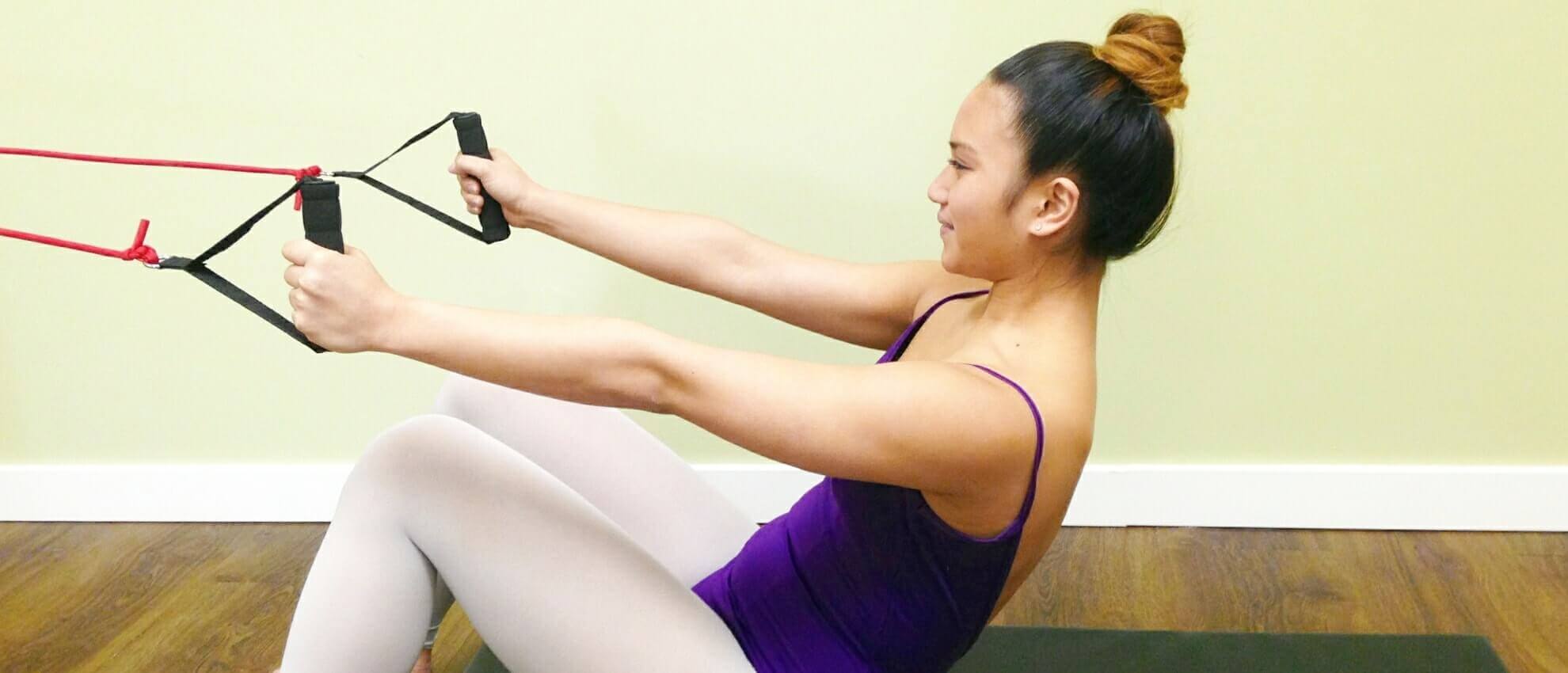
- Soft tissue therapy: Using manual techniques to release tension in the surrounding forearm muscles
How Chiropractic And Physiotherapy Help
At Cedar Chiropractic & Physiotherapy in Burnaby, we look at more than just your elbow. Your entire kinetic chain is examined, from your neck and shoulder down to your wrist, to see why the elbow became the weak link in the first place.
Your treatment plan may include
- Ergonomic guidance: Specific, practical changes to your workstation to stop the daily irritation
- Manual therapy: Joint mobilizations to ensure your elbow and wrist are moving through their full, natural range
- Progressive loading: A custom exercise plan that builds your tendon back up without over-stressing it
The Takeaway
Lateral epicondylitis is frequently a daily habit injury. By making small corrections to how you lift, grip, and sit, you can stop the cycle of irritation. When combined with a professional strengthening approach, these changes allow your tendon to heal and adapt.
If you are dealing with persistent elbow pain, the team at Cedar Chiropractic & Physiotherapy is here to help. Book your consultation today and start rebuilding your strength.
Frequently Asked Questions About Acupuncture And Chronic Pain In Burnaby
Q: What is the fastest way to cure tennis elbow?
A: Some approaches which may be helpful in easing tennis elbow pain include rest, correcting any ergonomic issues, gentle rehab exercises and therapy such as physiotherapy or chiropractic care.
Q: How do you know if you have tennis elbow?
A: Some common symptoms of tennis elbow or lateral epicondylitis include feelings of soreness, pain or burning on the outside of your elbow or forearm. These symptoms can be worsened with activities such as lifting, gripping and general prolonged use.
Q: What are some tennis elbow causes?
A: Tennis elbow can have many different causes. Some of these include long term overuse of your forearm muscles and tendons. Other reasons could be from repetitive wrist actions such as grabbing or twisting such as using a screwdriver.