
Achilles Pain: Early Signs Runners Should Not Ignore
Pause and consider that pattern for a moment. If this were a simple case of active inflammation, continuous pounding on the pavement would make the pain steadily worse with every single foot strike, not temporarily mask it away. That deceptive warming-up phase tricks countless runners into thinking their injury is minor, while quietly pushing your Achilles into a much deeper, harder-to-treat structural strain.
Get Help For Achilles Pain
At Cedar Chiropractic & Physiotherapy in Burnaby, we treat runners every day who are caught in this exact cycle. Understanding what is actually happening inside your tendon, why your training mileage plays such a massive role, and how to intervene early can mean the difference between a minor routine adjustment and months on the sidelines.
Dispelling The Myth: Tendinitis Vs. Tendinosis
For decades, almost any pain at the back of the ankle was labeled “Achilles tendinitis.” The suffix “-itis” implies active, acute inflammation. When runners hear this, they naturally assume the solution is rest, ice, and anti-inflammatory medication to calm down the “inflammation”.
Modern sports science shows that chronic Achilles pain is rarely driven by active inflammation. Instead, the condition is almost always Achilles tendinosis.
Tendinosis is a degenerative condition characterized by a breakdown of the tendon’s internal collagen structure. Instead of clean, parallel fibers that efficiently absorb and release energy like a tight spring, a tendon with tendinosis develops disorganized, weakened collagen fibers.
Because there is minimal active inflammation present in tendinosis, resting for a few weeks and taking anti-inflammatory pills will not fix the underlying structural weakness. The tendon must be progressively loaded to stimulate fresh collagen rebuilding.
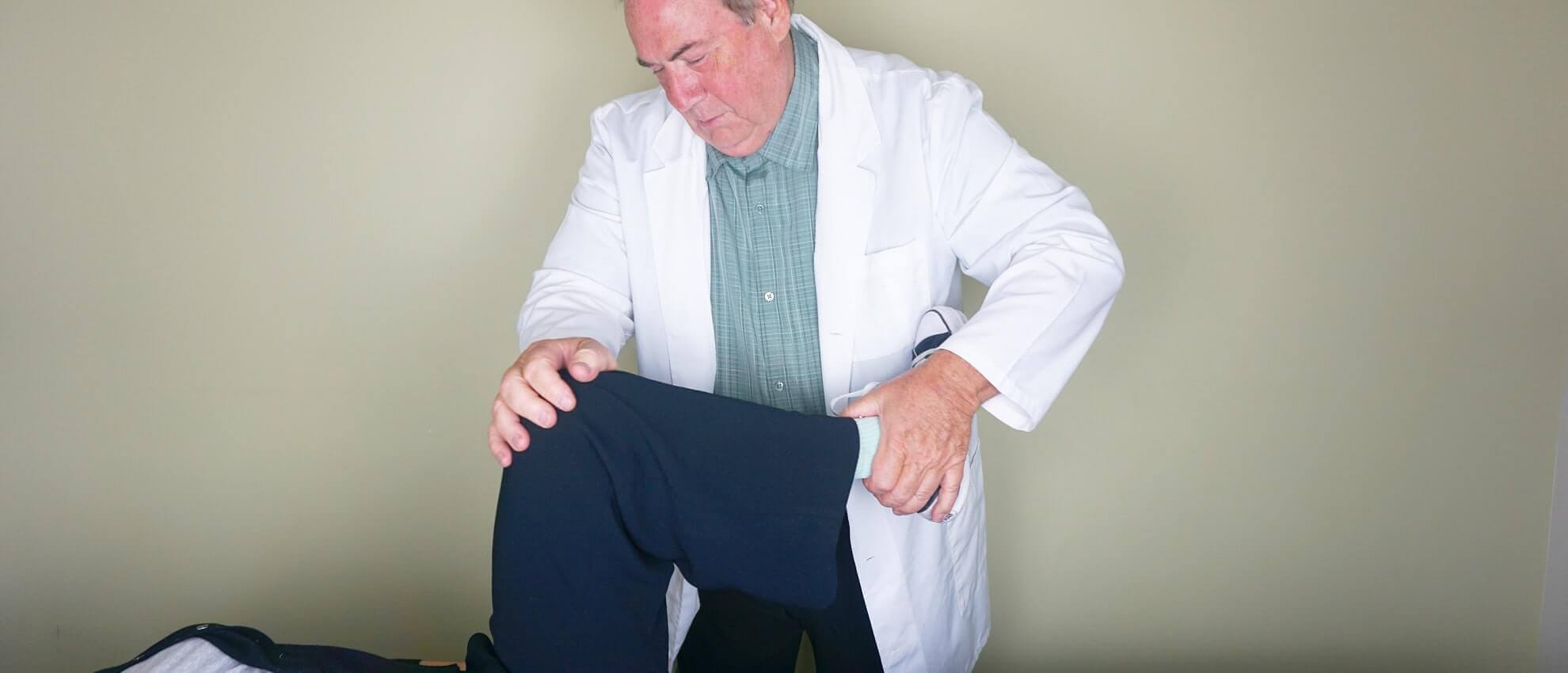
Location Matters: Mid-Portion Vs. Insertional Tendinopathy
Achilles pain generally presents in one of two distinct areas, and identifying which one you have is crucial for directing your treatment:
- Mid-portion Achilles tendinopathy: This is by far the most common form, accounting for roughly 75% to 80% of cases. The pain, swelling, or tenderness is located 2 to 6 centimeters above where the tendon attaches to the heel bone. Mid-portion issues respond exceptionally well to progressive heavy loading exercises
- Insertional Achilles tendinopathy: Pain occurs directly at the point where the tendon attaches into the back of the heel bone. This type often involves bone spurs or bursitis and requires careful management to avoid positions that cause your tendon to compress against the heel bone
How Running Mileage And Volume Drive Tendon Stress
Your Achilles tendon acts like a high-powered elastic band, storing and releasing energy with every single foot strike. When you run, your Achilles absorbs forces equal to 6 to 8 times your total body weight.
Tendons are living tissue that adapt to physical stress, but they adapt much more slowly than muscles because they have a limited blood supply. When you rapidly increase your running volume, introduce steep hill repeats, or switch to lower-drop running shoes without adequate transition time, you exceed the tendon’s ability to repair itself between runs.
If the rate of mechanical breakdown from running consistently outpaces your body’s ability to synthesize new collagen, the tendon enters a state of chronic overload.
The Danger Of Ignoring Early Warning Signs
Running through early Achilles pain is one of the most common reasons runners end up with long-term injuries. Because the tendon warms up during the middle of a run, it is easy to convince yourself that the tissue is fine.
Continuing to overload a degraded tendon leads to progressive structural breakdown:
| Overload stage | What you feel | What is happening |
| Reactive stage | Mild morning stiffness; mild ache after hard runs that vanishes during movement | The tendon thickens temporarily to protect itself from a sudden increase in training load |
| Tendon dysrepair | Persistent ache after every run; localized swelling or a visible bump on your tendon | The collagen matrix begins to disorganize, and small micro-vessels grow into the tissue |
| Degenerative stage | Constant pain during daily walking; severe stiffness; inability to push off forcefully | Significant collagen breakdown with areas of cell death, making the tendon soft and weak |
Ignoring early warning signs pushes your tendon from the easily reversible reactive stage into the degenerative stage. What could have been resolved in 4 to 6 weeks with smart load management can suddenly require 6 to 12 months of intensive rehabilitation.
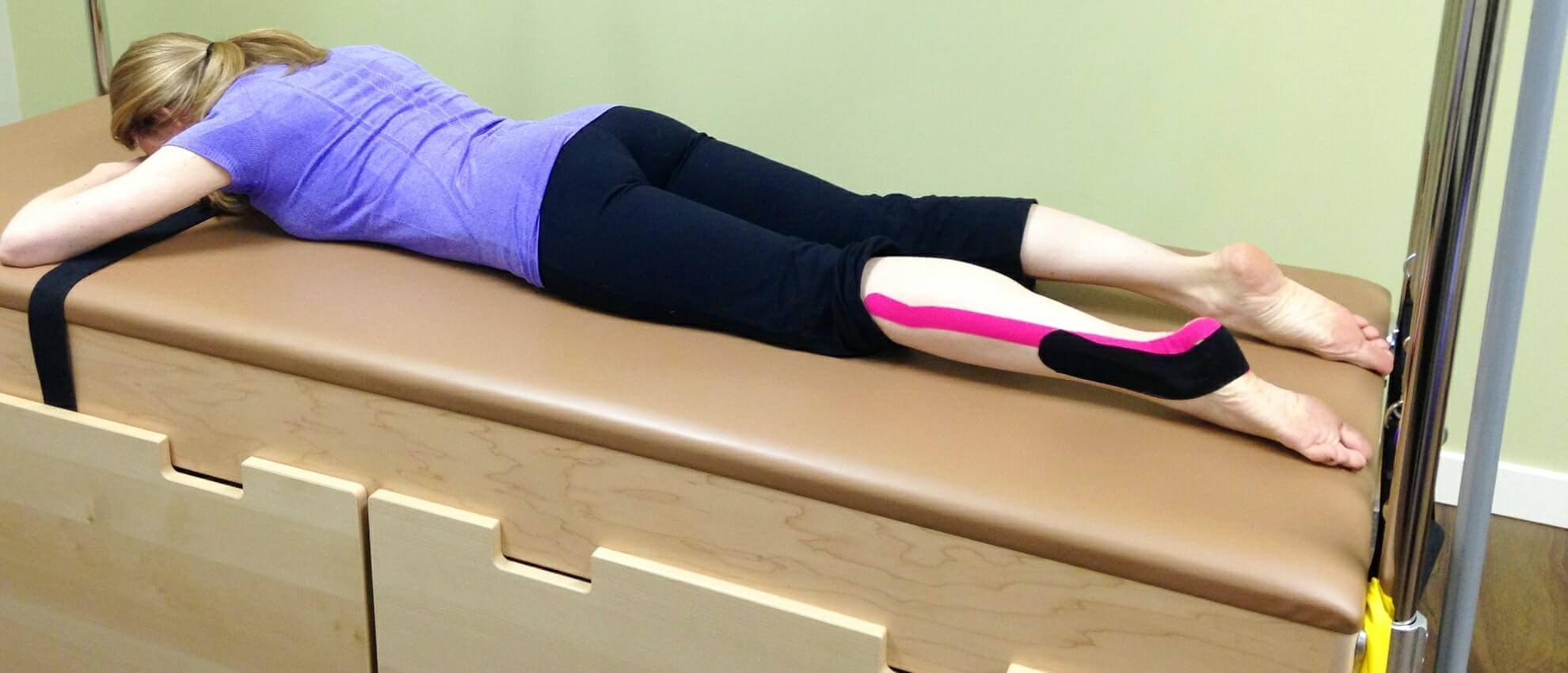
Rebuilding Tendon Strength: Key Exercises
Rest alone will not make a degenerative Achilles stronger. To remodel disorganized collagen fibers into strong, parallel strands, the tendon requires controlled, heavy mechanical load.
1. Isometric calf holds
Primary goal: Calming down acute tendon pain while maintaining muscle activation without placing dynamic stress on your joint.
How to do It: Stand on flat ground near a wall for balance. Raise up onto the balls of both feet until your calves are fully contracted. Hold this elevated position completely still, keeping your weight evenly distributed across your toes. Focus on deep, steady breathing throughout the hold.
Target duration: Hold for 30 to 45 seconds; repeat 4 to 5 times with 1 minute of rest between holds.
2. Heavy slow resistance (HSR) standing heel raises
Primary goal: Stimulate collagen remodeling and increase the tensile load capacity of your Achilles tendon.
How to do It: Stand on the edge of a step with your heels hanging slightly off. Holding a dumbbell or wearing a weighted backpack, slowly press up onto your toes over 3 seconds. Pause briefly at the top, then slowly lower your heels below the step level over 3 seconds under full control.
Target volume: 3 sets of 8 to 10 slow, deliberate repetitions, 3 times per week.
3. Heavy slow resistance (HSR) seated heel raises
Primary goal: Selectively load and strengthen your deeper soleus muscle, which absorbs the vast majority of vertical impact forces during running.
How to do It: Sit upright at a seated calf raise machine (or sit on a sturdy chair with the balls of your feet elevated on a step and a heavy dumbbell resting securely across your lower thighs). Slowly press through the balls of your feet to raise your heels as high as possible over a count of 3 seconds. Pause briefly at the top, then slowly lower your heels below the level of the step over a full 3-second count until you feel a deep, controlled stretch in your lower calf.
Target volume: 3 to 4 sets of 8 to 10 slow, deliberate repetitions, 3 times per week.
Expected Prognosis And Recovery Timeline
The overall prognosis for Achilles tendinopathy is very positive, provided you shift your focus from passive rest to active load management.
Because tendons rebuild collagen slowly, recovery is a gradual process rather than an overnight fix. Most runners following a structured rehabilitation program can expect significant pain reduction within 4 to 6 weeks, with full structural remodeling and a complete return to peak running performance taking between 12 to 24 weeks.
Get Back To Pain-Free Running In Burnaby
Achilles pain does not mean your running days are over, but it is a clear message from your body that your current training load exceeds your tendon’s capacity. By addressing structural changes early and rebuilding tendon strength through targeted exercise, you can overcome Achilles tendinosis and run with confidence.
Our clinical team at Cedar Chiropractic & Physiotherapy in Burnaby, BC, specializes in sports injury rehabilitation, biomechanical assessment, and progressive load management. If Achilles stiffness or pain is holding you back, contact Cedar Chiropractic & Physiothearpy today to schedule your runner’s assessment and get back on the trail.
Frequently Asked Questions About Urinary Urgency
Q: How long does it take for Achilles tendonitis to heal?
A: Depending on the severity of your injury, mild Achilles pain often resolves within 2-4 weeks and moderate injuries between 6-12 weeks with physiotherapy and the proper exercises. When your pain becomes chronic, recovery can take longer often requiring 12 to 24 weeks to get back to your regular rhythm.
Q: What are 2 signs of Achilles tendonitis?
A: Achilles tendonitis often results in pain in your ankle and heel, along with your Achilles tendon feeling stiff and sore.
Q: What are some Achilles tendon pain treatments?
A: Mild forms of Achilles pain may sometimes respond to rest and simple stretches. When your Achilles tendon pain becomes more persistent, then therapy such as physiotherapy or chiropractor care with specific exercises of gradually increasing intensity may be the best path for your recovery.
Restuls will vary from person to person.