
Why You Should Not Ignore Urinary Urgency
Many people quietly tolerate urinary urgency for months or even years. Some assume it is a natural part of getting older, while others shrug it off as a weak bladder or a consequence of having children.
What surprises many individuals is that persistent urinary urgency is frequently tied to the health of your lower spine and nervous system. At Cedar Chiropractic & Physiotherapy in Burnaby, we look at your body as an interconnected system. Understanding the deep neurological links between your back and your bladder can help you address the root cause of urinary urgency rather than just managing the symptoms.
Get Help
Contact Cedar Chiropractic & Physiotherapy today to schedule a thorough spinal and musculoskeletal evaluation, and discover how restoring structural balance can help you live with confidence and comfort.
The Neurological Connection: How Your Spine Talks To Your Bladder
Your bladder is not an independent organ operating on its own clock. It is a highly sensitive muscular pouch that relies entirely on a continuous, two-way loop of neurological communication with your brain and spinal cord.
As your bladder fills with fluid, stretch receptors inside the bladder wall send electrical signals up through your pelvic nerves, entering the lower region of your spinal cord. Your brain processes this information and, when appropriate, sends a signal back down to relax your pelvic floor muscles and contract your bladder muscle to allow urination.
Communication channels
This delicate communication line runs directly through your lower thoracic, lumbar, and sacral regions of your spine. If the joints in your lower back are experiencing altered movement mechanics, structural stress, or disk-related issues, the nerves traveling to and from your pelvic organs can become irritated or compressed.
When these nerve pathways face structural interference, the signals become distorted. Your brain may receive hyperactive, false alarms stating that your bladder is completely full when it is only holding a tiny amount of fluid, creating a sudden, panicked sense of urinary urgency.
Beyond The Bladder: The Role Of Pelvic And Lumbar Mechanics
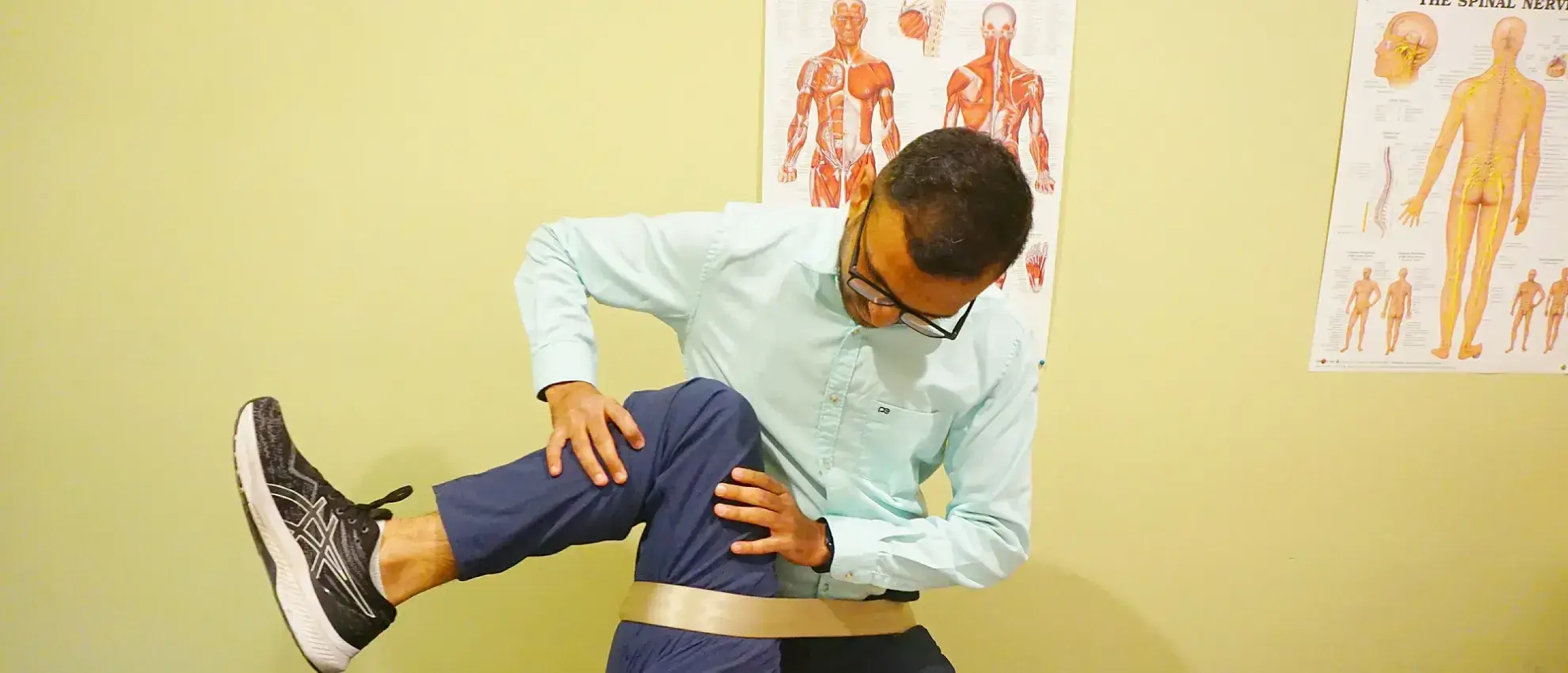
To fully understand why urinary urgency occurs, it is essential to look at the muscular and joint relationships surrounding your pelvic bowl. Your bladder sits directly atop the pelvic floor muscles, which act as a supportive hammock at the base of your torso. These muscles work in absolute harmony with your deep core, your diaphragm, and the stabilization muscles of your lower back.
Protective holding pattern
When you experience long-term lower back stiffness or pelvic joint dysfunction, the surrounding muscles naturally tighten into a protective holding pattern. This chronic muscle tension can radiate directly into your pelvic floor.
An overactive pelvic floor is unable to fully relax. Because these muscles are constantly braced, they put steady physical pressure on your bladder and urethra. This structural compression mimics the sensation of a full bladder, causing you to feel a sudden, frequent compulsion to empty it, even if you just left the restroom five minutes ago.
Why You Should Not Ignore The Signals
Ignoring persistent urinary urgency or trying to treat it purely as an isolated bladder issue can lead to broader physical challenges over time. Because your nervous system prioritizes protective mechanisms, a hidden issue in your lower lumbar spine or pelvis can gradually impact other areas of your health.
Left unaddressed, the chronic mechanical stress that causes bladder signaling issues can lead to:
- Progressive lower back discomfort or local joint stiffness
- Radiating nerve irritation into your hips, glutes, or legs
- Altered walking patterns and hip joint fatigue due to pelvic guarding
- Chronic sleep disruption caused by waking up multiple times a night to urinate
By looking at urinary urgency through the lens of spinal and neurological health, you can address these compounding factors early, preventing temporary mechanical irritation from turning into long-term functional limitations.
How Chiropractic Care Supports Bladder And Pelvic Health
At Cedar Chiropractic & Physiotherapy, our approach to care centers on restoring natural movement mechanics and optimizing nervous system function. We do not treat urinary urgency as an isolated urological condition; instead, we evaluate the structural framework that houses and protects your nerve pathways.
Our evidence-informed care plan focuses on several key areas:
Restoring spinal and pelvic mobility
Using manual therapies including adjustments and joint mobilizations, we focus on reducing mechanical restrictions in your lumbar spine and sacroiliac (SI) joints. Restoring normal motion takes the physical pressure off the nerve roots that control your bladder and pelvic organs.
Deep flexor and core conditioning
We design targeted active recovery protocols to help balance the musculature around your pelvis and lower back. Improving the endurance of your deep spinal stabilizers takes the physical workload off your pelvic floor, allowing those muscles to drop out of a protective, hyperactive state.
Neuromuscular re-education
We guide you through specific coordination and breathing strategies that naturally regulate your autonomic nervous system. Learning to integrate deep diaphragmatic breathing with pelvic movement helps calm hyperactive nerve signaling, reducing the frequency of sudden bladder alarms.

Take Control Of Your Health In Burnaby
You do not have to plan your life around the closest restroom or accept sudden urinary urgency as an unchangeable reality. Your nervous system is incredibly adaptable, and addressing the mechanical health of your back can have a profound impact on your overall pelvic comfort and daily quality of life.
Located in the heart of Burnaby, our team at Cedar Chiropractic & Physiotherapy provides a modern, collaborative environment focused on evidence-based, patient-centered care. We take the time to look at your entire health profile, helping you understand how your spine, core, and nervous system operate together.
Results will of course vary from person to person
Get Help
Contact Cedar Chiropractic & Physiotherapy today to schedule a thorough spinal and musculoskeletal evaluation, and discover how restoring structural balance can help you live with confidence and comfort.
Frequently Asked Questions About Urinary Urgency
Q: What are some common cause of urinary urgency?
A: Some common causes for urinary urgency include bladder infection or urinary tract infection (UTI), an overactive bladder or issues with the prostate.
Q: How do you stop urinary urgency?
A: Some strategies that may help with urinary urgency can include things such as going to the bathroom regularly, pelvic floor exercises like Kegels and addressing any underlying causes that may be contributing to the urgency such as infections or prostate problems.
Q: What is the difference between urinary urgency and overactive bladder?
A: Urinary urgency is a general term to describe the sudden, strong feeling that you need to urinate. When this is coupled with frequent urination and sometimes leakage, this can be referred to as having an overactive bladder.